
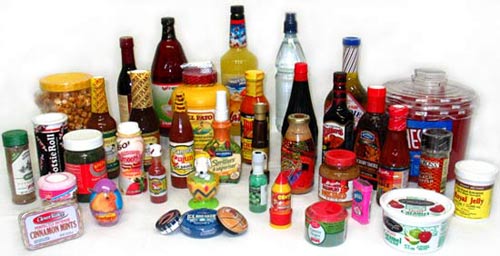
Almost all of us love sweet foods and sweetened drinks and several of our foods and beverages (F&B) are sweet. But after we consume that short burst of sweetness, we may worry about how sweets affect our waistline and our overall health. Our bodies need one type of sugar, called glucose, to survive. “Glucose is the number one food for the brain, and it’s an extremely important source of fuel throughout the body,” says Dr. Kristina Rother, an NIH pediatrician and expert on sweeteners. But there’s no need to add glucose to your diet, because your body can make the glucose it needs by breaking down food molecules like carbohydrates, proteins, and fats. Some sugars are found naturally in foods, such as fruits, vegetables, and milk. “These are healthful additions to your diet,” says Dr. Andrew Bremer, a pediatrician and NIH expert on sweeteners. “When you eat an orange, for instance, you’re getting a lot of nutrients and dietary fiber along with the natural sugars.”
Calling sugar a sweet poison, UK based Telegraph emphasizes that sugar is as dangerous as alcohol and tobacco. It also echoed claims of health experts that Britain’s obesity crisis could be reversed within five years if food companies reduced sugar in products by 30 per cent. A group of health experts and academics have come together to launch ‘Action on Sugar’, a campaign which is calling on the food producers to dramatically reduce levels of sugar in everyday products. They are also asking companies to stop advertising sugary drinks and snacks to children claiming sugar has become ‘the alcohol of childhood.’ And they are calling on the government to fine those who do not meet reduction targets or impose a Sugar Tax. Professor of Clinical Epidemiology at the University of Liverpool, UK, Simon Capewell says, “Sugar is the new tobacco. “Everywhere, sugary drinks and junk foods are now pressed on unsuspecting parents and children by a cynical industry focused on profit not health.
How sugar actually affects heart health is not completely understood, but it appears to have several indirect connections. For instance, high amounts of sugar overload the liver. “Your liver metabolizes sugar the same way as alcohol, and converts dietary carbohydrates to fat,” says Dr. Hu, professor of nutrition at the Harvard T.H. Chan School of Public Health.. “The effects of added sugar intake — higher blood pressure, inflammation, weight gain, diabetes, and fatty liver disease — are all linked to an increased risk for heart attack and stroke,” says Dr. Hu.
India Today, in its article, “How excessive sugar is poisoning our diet; India no different” published in Dec, 2015, based on an unquoted recent survey says “Indian study shows that that no one can beat Indians, as far as consumption of sugar is concerned. India is the largest consumer of sugar in the world and the second largest producer (after Brazil) in the world, according to data from the India Sugar Trade Industry (2013).”
“The reason why Indians end up eating so much sugar is they are also consuming traditional Indian sweets along with sugar-sweetened beverages and Indian beverages like sweetened buttermilk etc, which are very high in calories and glycemic load (a measure that estimates how much the food will raise a person’s blood glucose level after eating it). An article published in PubMed, authored by Dr Seema Gulati and Anoop Mishra provides some interesting insights into the sugar consumption patterns in India.”
“While a slight reduction in ‘sugar and honey’ consumption has been recorded from 1993 to 2010 in rural and urban areas, there is a substantial increase in sugar-containing food items (processed foods, and beverages) over time, especially in urban areas,” says the research article.
According to India Today, the study conducted among 1,800 school children aged 9-18 years and their mothers, from four cities in India–Delhi, Bangalore, Pune, and Agra-shows there is a strong association between the dietary intake of children and their mothers. In the areas under study, mothers preferred packaged food over restaurant food as they felt it was more ‘hygienic’. The food habits in this group were also influenced by television commercials, peer pressure and also due to the craze of consuming westernized food.
A study titled “Averting Obesity and Type 2 Diabetes in India through Sugar-Sweetened Beverage Taxation: An Economic-Epidemiologic Modeling Study” published by American NCBI in Jan 2014 claims that recent assessments reveal a majority of sugar sweetened beverages (SSB) sales now occur outside the US and Europe, where marketing efforts appear most focused. SSB sales in India, for example, have increased by 13% year-on-year since 1998, exceeding 11 liters per capita per year. The study, which is quoted by WHO in several of its own papers, suggests that a 20% tax has a positive effect. Using standard modeling procedures, the study established that “Overweight and obesity prevalence declined by 1.6% to 5.9% and type 2 diabetes incidence by 1.2% to 1.9% from the baseline estimates among the Indian subpopulations under a 20% SSB tax; a 20% SSB excise tax would be expected to prevent 11.2 million new cases of overweight and obesity (a 3.0% decline), and 400,000 cases of type 2 diabetes (a 1.6% decline) over the decade 2014–2023, based on a microsimulation model informed by nationally representative consumer expenditure, price, BMI, and type 2 diabetes incidence data.
A nation addicted to Cricket and Bollywood, despite so much around, could be well addicted to sugar, and that addiction may not go off easily. It’s not just sweets or sugary drinks, but also in other products in which we might hardly expect them like sports drinks, soda, desserts, cereals, bread, tea etc. Of particular emphasis are biscuits which stealthily seem to be getting away unnoticed. Biscuit is a food item that seems to be getting sweeter by the day, and this is something that seems to have been comparatively less studied for sugar control, at any level. The menace of our own delicacies can only be controlled by a cohort of coordinated efforts. Given the fact that we have already been tagged as the diabetes capital of the world, these are urgent and should be undertaken also as a test of public will when it comes to health.
Increasing tax rates is one proven effective way, but may not be enough. We should revisit our sugar standards in F&B and reestablish the levels to be permitted in our food products, in line with contemporary understandings. An equal emphasis on education and enforcement should be placed on the level of sugar content used in our F&B products. Regulating the marketing of sugar-based products by specifying the sugar level of product, including in the labeling could help making buying decisions. Introduction of warning labels can be considered for foods with exceptionally higher sugar levels. Public education and awareness on the negative health impacts of sugar could go a long way in this direction. Media and advertising had always been a backbone for F&B manufacturers. FMCG companies use media to sell their products with their bizarre claims, quoting their own strange formulations, developed in their fancy laboratories. Discouragement of advertising of sugar-based food products and a counter education of public on sugar menace should sensitize households.
India is a nation where there is no celebration without sweets and with more reasons to celebrate; muh meetha karna should never become a scary occasion.
